
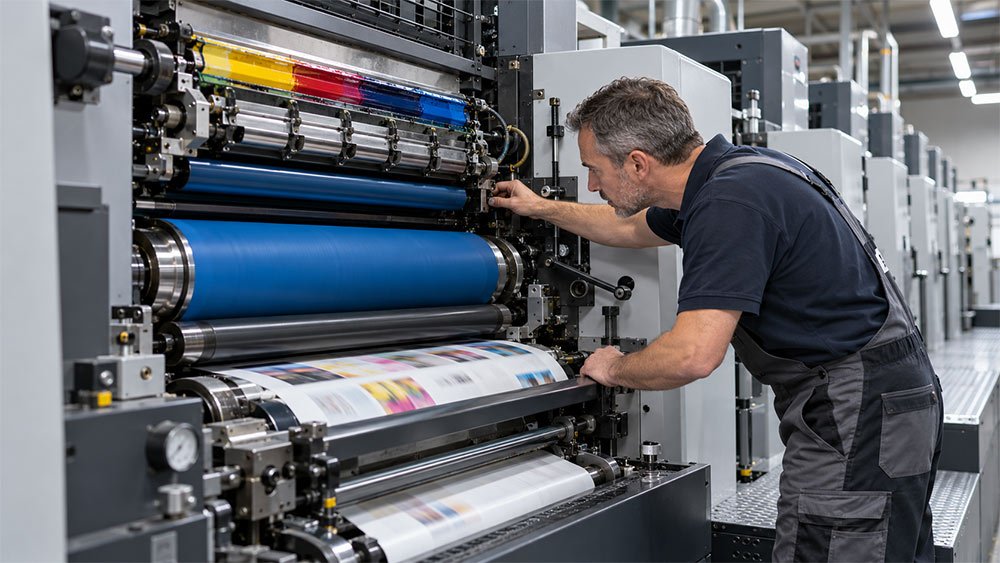
Two web presses run the same job, the same ink, the same plates. One holds clean dot and steady solids through the full run. The other drifts by the ten-thousandth copy. The offset printing blanket is often the part nobody checks first, yet it decides how faithfully the image reaches paper.
manroland Goss India is the Indian subsidiary of manroland Goss Web Systems, Augsburg. It brings web offset engineering across newspaper and commercial printing, backed by an India-based service and consumables team that supports presses through their working life.
Most blanket buying starts with size and price. Few conversations start with application, substrate, press speed, or run profile. The surface that carries every image gets treated as a commodity line item, and print consistency pays for it.
This guide explains how the blanket shapes ink transfer and print consistency, why coldset and heatset need different blankets, and how to select the right printing press blanket against the production environment rather than unit cost.
Offset Printing Blanket in Web Offset Image Transfer
The blanket sits between plate and paper. Its condition and suitability decide how well the inked image reaches the web.
An offset printing blanket is the rubber-surfaced covering on the blanket cylinder that transfers the inked image from plate to paper. Its construction, condition, and fit to the press and substrate shape ink transfer, dot sharpness, and print consistency across the run.
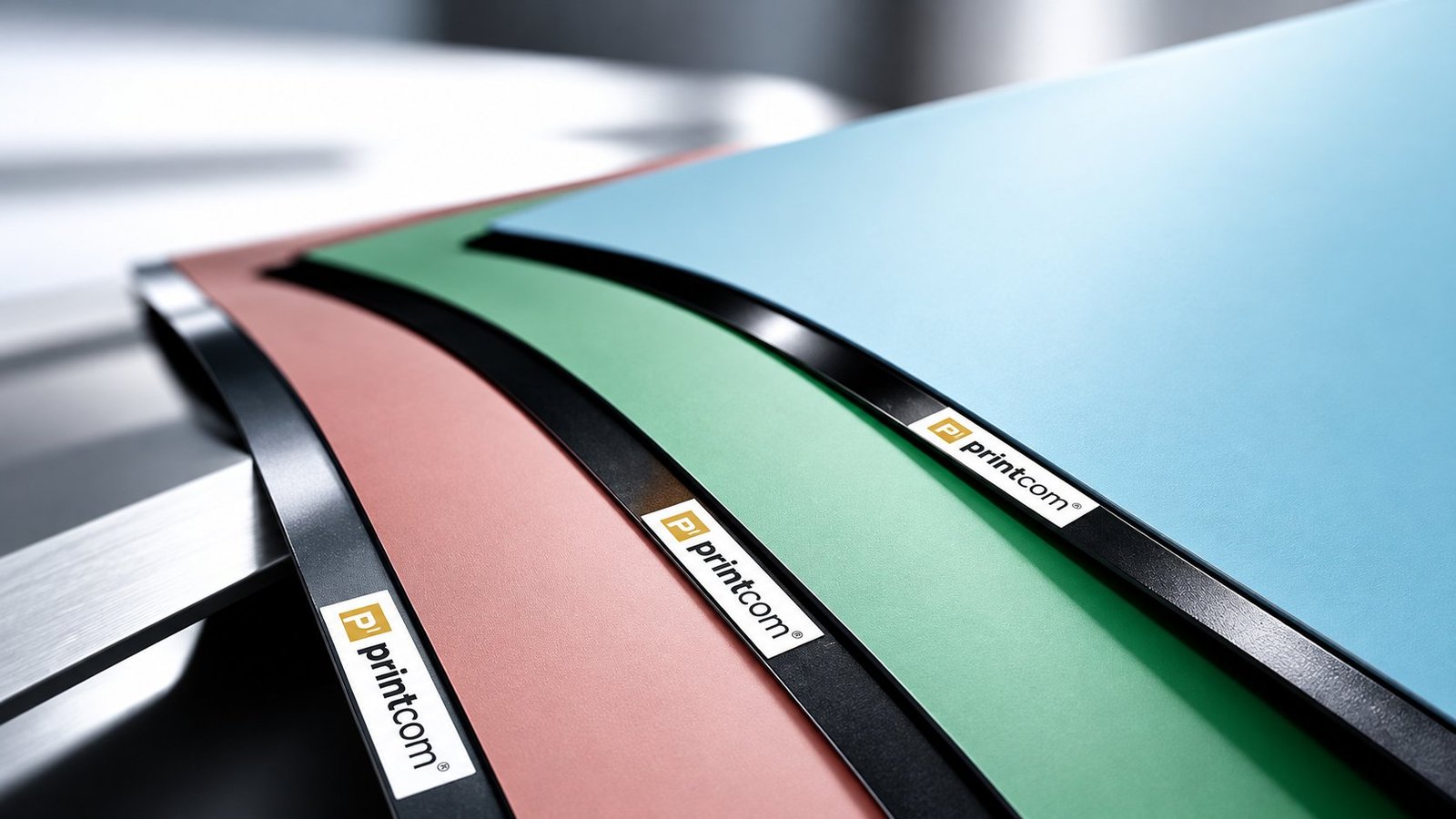
Plate to Blanket to Substrate Transfer Sequence
In offset printing, ink moves from the plate to the blanket, then from the blanket to the paper. The blanket is the surface that actually meets the substrate. Because it makes the final contact, its behaviour governs how ink, halftone dots, and fine detail land on the web. A press can be set correctly and still lose quality if the blanket cannot hold that contact evenly.
Blanket Condition and Print Consistency
Blanket condition shows up in the printed sheet before anywhere else. A worn, swollen, or unsuitable blanket changes ink transfer, softens dot definition, and makes solids uneven. Output that looked acceptable at start-up drifts as the job continues. The blanket protects consistency through the whole run, from the first copy to the last.
The blanket works alongside ink, dampening, impression, and register. Its fit to the application sets the ceiling on what the press can hold.
Coldset and Heatset Printing Blanket Requirements
The operating environment changes what a blanket has to do. A blanket matched to newspaper work is not matched to commercial heatset production.
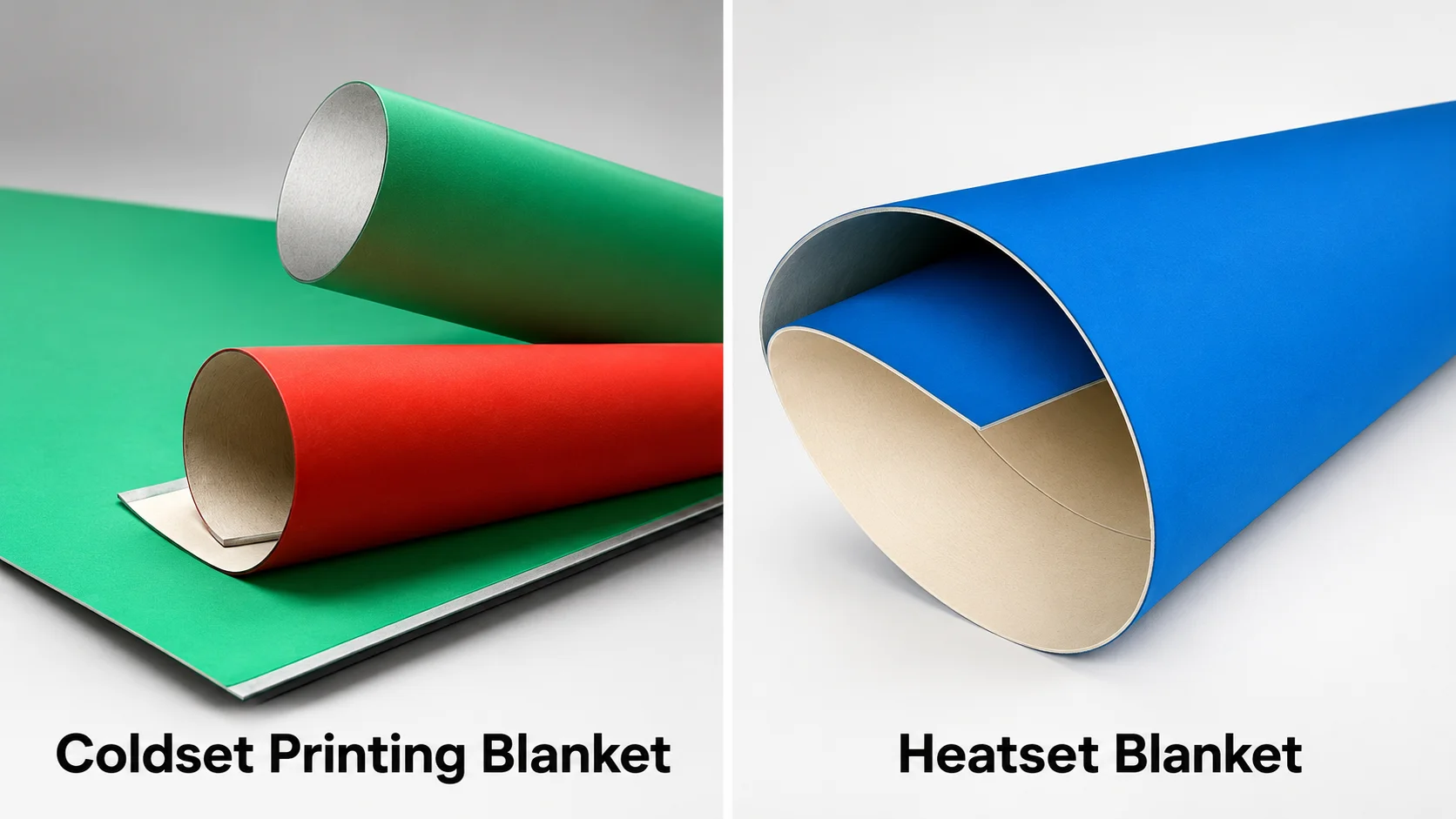
Coldset Printing Blanket for Newsprint Production
Coldset web offset covers newspaper and similar uncoated work, where ink dries by absorbing into the paper rather than through a dryer.
- Absorbent newsprint — Ink sets into the sheet, so the blanket must release ink cleanly onto a rough, porous surface.
- High-speed continuous runs — Newspaper production runs long and fast, demanding steady transfer over extended print runs.
- Repeatable reproduction — Output must stay consistent across the run, not only at start-up.
- Application fit — The coldset printing blanket must suit these conditions. Printcom CL is manroland Goss India’s blanket for coldset web presses.
Heatset Printing Blanket for Coated Stock
Heatset web offset covers commercial work on coated stock, where a dryer sets the ink and image-quality expectations are higher.
- Coated substrates — Smoother, less absorbent stock changes how ink transfers and how detail holds.
- Dryer exposure — Higher thermal load calls for a blanket that stays stable through heatset conditions.
- Fine reproduction — Magazines, catalogues, and brochures demand tight colour and detail consistency.
- Application fit — The heatset printing blanket must match this environment. Printcom HS is positioned for heatset presses, EUROMAN supports heatset commercial production, and LITHOMAN serves magazine and catalogue work.
One blanket specification should not carry both applications. Substrate, speed, and thermal load decide what the blanket must deliver.
Web Offset Printing Blanket Selection Criteria
Selection follows the production environment, not the price list. A working framework matters more than any single blanket claim.
Blanket Selection Factors and Press Compatibility
Match the blanket to how the press actually runs. The factors that belong on the evaluation sheet:
- Application — Coldset or heatset production, as the base decision.
- Substrate range — The paper grades the press runs day to day.
- Substrate behaviour — Newsprint roughness and absorbency versus coated-stock smoothness influence blanket contact, ink transfer, and reproduction requirements.
- Press speed and run profile — Running speed, run length, and job-change frequency.
- Reproduction quality — The dot and detail the work demands.
- Construction factors — Compressibility, surface characteristics, thickness consistency, dimensional stability, recovery, and durability.
- Press compatibility — Blanket format follows press architecture. LITHOMAN configurations use conventional or sleeve blankets depending on the system version.
Should One Blanket Be Used Across Both Coldset and Heatset?
No. A blanket built for one application can create problems in the other even when new, and the wrong fit is not corrected by good handling. The right blanket in poor condition also loses consistency in service. Selection and maintenance are separate disciplines. Choose the blanket against substrate, speed, and reproduction requirements, then assess its condition on its own.
The blanket earns its place against the production environment. Purchase price is one input in that decision, not the deciding one.
Printing Press Blanket Symptoms and Performance
Poor output should not be blamed on the blanket by default. Symptoms are signals to investigate, weighed alongside press and process conditions.
- Diagnostic signals — Declining ink-transfer uniformity, loss of dot definition, inconsistent solids, or variation building through the run may point to blanket-related issues.
- Check the process first — Impression setting, ink and water balance, roller and plate condition, register, and substrate variation should be ruled out before condition-judging the blanket.
- Condition versus specification — A deteriorated but correct blanket and a wrong-specification new blanket are two different problems with two different fixes.
- Supporting practice — Correct installation, a clean surface, appropriate washing, and regular inspection keep a suitable blanket performing.
- Run stability — Assess whether print quality remains consistent from start-up through the full production run, rather than judging blanket performance only on the first acceptable copies.
Consistency across the full run, not the first good copies, is the real measure of a correctly selected blanket.
Conclusion
The blanket carries the image to paper. Its fit to the application sets the ceiling on ink transfer, dot sharpness, and print consistency.
Coldset and heatset are different jobs. Substrate, speed, and thermal load decide what the blanket must hold.
manroland Goss India brings OEM web offset knowledge, India-based support, and application-specific consumable options to that decision.
Judged through stable output and repeatability across the run, blanket economics live in production performance, not unit price.
Talk to the manroland Goss India team for blanket selection matched to your application, substrate, and run profile. ENQUIRE NOW.
Our Digital Presence:
Explore manroland Goss India across web offset press solutions, certified pre-owned systems, print service support, consumables, and industry insights built for newspaper, commercial, and packaging print operations. From press installations and modernization to lifecycle support and productivity improvement, our platforms showcase how Indian print plants are adapting to changing production and capex realities.
Visit our website to explore products, services, and insights from the print industry.
Connect with us on:
Website | Products | Services | Insights
Stay updated through:
Instagram | YouTube