A press stops in the middle of a peak edition run. But the press maintenance schedule says servicing is weeks away. Rising fault messages, register drift or unusual vibration may say otherwise. Which signal should determine when preventive maintenance begins?
Fixed maintenance intervals provide structure, but production load and press condition rarely follow the same timetable. Effective preventive maintenance must respond to operating intensity, emerging condition signals and service history.
manroland Goss India combines India-based lifecycle service expertise with Augsburg engineering support, using technical audits, maintenance history and press condition to plan interventions that protect production reliability and uptime.
In this edition, we explore how plant heads can plan preventive maintenance around production cycles, set intervention priorities and escalate servicing before emerging issues disrupt production or compromise press reliability.
Structuring a Press Maintenance Schedule Around Production
A press maintenance schedule works when it follows the production plan. The structure starts with maintenance tiers and a clear line between planned and reactive work.
A press maintenance schedule is a planned sequence of inspections, servicing tasks and part replacements, timed to production load and equipment condition so the press stays available when output is needed.
Daily, Weekly, Monthly and Periodic Maintenance Logic
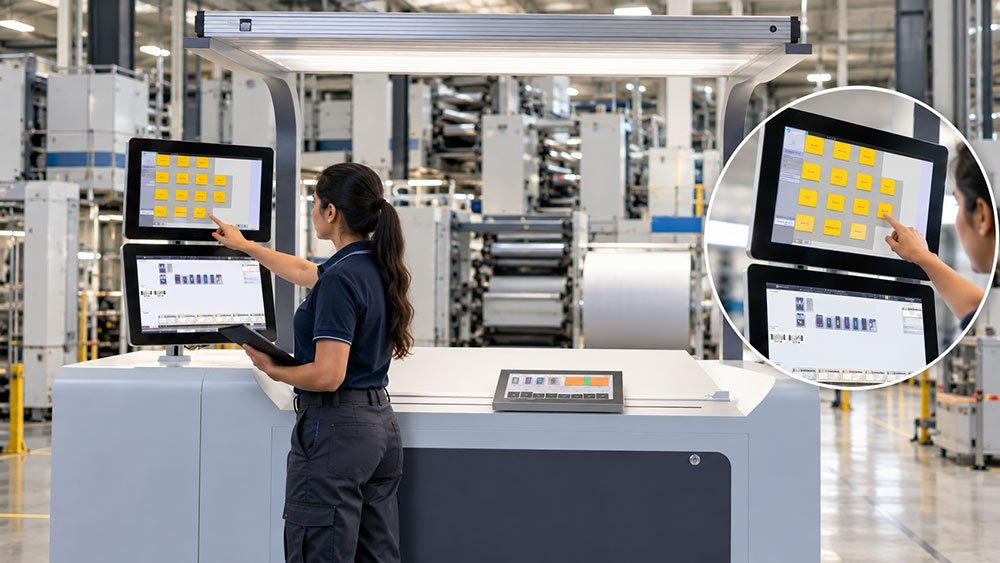
Each tier has its own job. Daily tasks cover operator-level checks, cleaning and lubrication points. Weekly and monthly tasks cover inspection points and wear parts. Periodic tasks cover deeper servicing and a technical review of the press.
Operating intensity sets the interval. A press running long daily shifts across several editions needs tighter intervals than one running a single short run.
Preventive Maintenance Versus Reactive Servicing
Preventive maintenance happens in a production window the plant chooses. Reactive servicing happens when the press forces a stop. The cost difference sits in lost production, rush parts and missed edition deadlines. A plant that runs mostly on reactive servicing has no control over when its downtime happens.
Once the tiers are set, the next step is fitting them around the production calendar and ranking units by risk.
Aligning Maintenance With Production Load and Equipment Risk
Maintenance timing decides how much production it costs. The schedule should follow the plant’s production calendar and put the most critical units first.
Planning Maintenance Around High-Load Periods and Shutdown Windows
Planned work should land where it costs the least output. That means reading the production calendar before setting the maintenance calendar.
- Production Calendar Mapping — Map edition deadlines, supplements and high-load periods before fixing maintenance intervals.
- Shutdown Windows — Use planned shutdowns and lower-load production windows for preventive servicing that needs the press stopped.
- Deferral Rules — Set clear rules for deferring tasks during critical production periods, with catch-up dates locked in advance.
Prioritising by Equipment Condition and Production Criticality
Units do not carry the same risk. Priority should follow equipment condition and the production impact of a failure.
- Criticality Ranking — Rank units by production impact. A unit whose failure stops the whole line comes first.
- Condition-Based Priority — Move tasks forward based on actual equipment condition, instead of following a fixed checklist sequence.
- Wear-Part Stock — Match spare and wear-part stock to the units that carry the highest production risk.
- OEM Parts Continuity — For installed manroland configurations, manroland Goss India provides OEM spare parts and technical support through its India service team.
With timing and priority set, the schedule needs clear triggers that tell the team when a task cannot wait.
Condition Signals That Prevent Unplanned Press Downtime
Fixed intervals cannot see what the press is doing between inspections. Condition signals fill that gap and tell the team when to act early.
Inspection Points, Wear-Part Monitoring and Early Warning Signs
Many developing press faults show warning signs before they cause a stoppage. The plant team needs to know which signals to watch and who acts on them. Common early warning signs include recurring fault messages, temperature warnings on drive motors and control cabinets, register or colour drift, rising start-up waste, and unusual noise or vibration.
Each signal should link to an action in the schedule. A recurring fault moves the related inspection forward. A temperature warning triggers a check of cooling and drives. Rising waste prompts a review of wear parts on the affected unit. When signals are logged and acted on, work happens before the problem turns into press downtime.
Is Your Press Maintenance Schedule Set by the Calendar or by Condition?
It should use both. Calendar intervals give the baseline for routine care, cleaning and inspections. Condition signals decide when a task moves forward. Wear parts and critical units should follow condition triggers, with the calendar as the fallback.
Some signals point to problems the plant team can fix. Others need specialist servicing, which is where escalation rules matter.
Service Escalation and Schedule Optimisation
The schedule gets better over time when escalation rules are clear and service records feed back into the intervals.
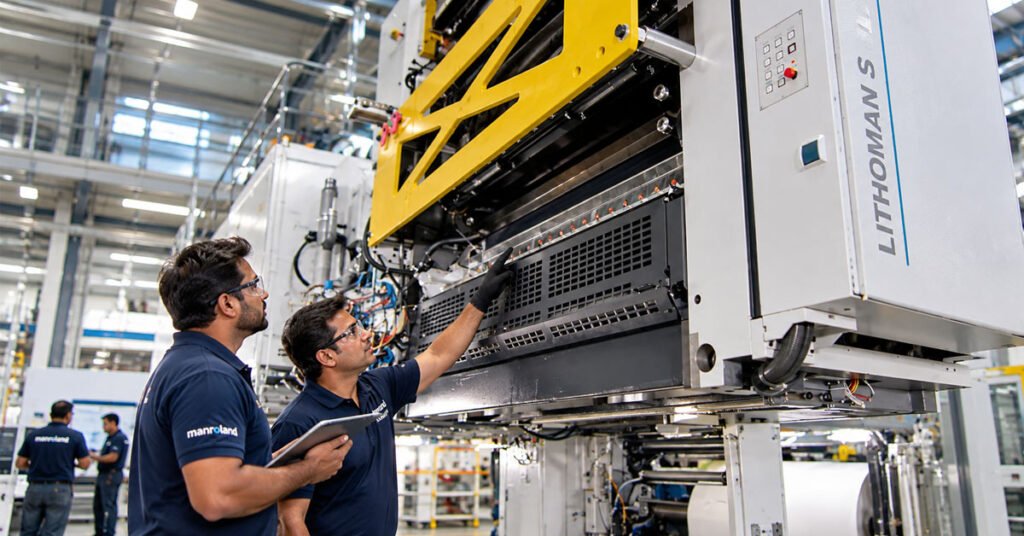
- Internal Maintenance Scope — Routine care, cleaning, lubrication and first-level inspection stay with the plant team, with clear task ownership on every shift.
- Specialist Press Servicing Triggers — Recurring faults, drive and controls issues, and obsolete components call for OEM-level diagnosis instead of repeated local fixes. Early escalation limits the risk of repeat failures.
- Technical Audits — A periodic technical audit checks the press against its current condition and service history, then resets intervals where needed. It also flags components that are reaching obsolescence.
- Maintenance Documentation — Log every intervention, part change and recurring issue against the unit. Component history shows patterns that a single repair cannot.
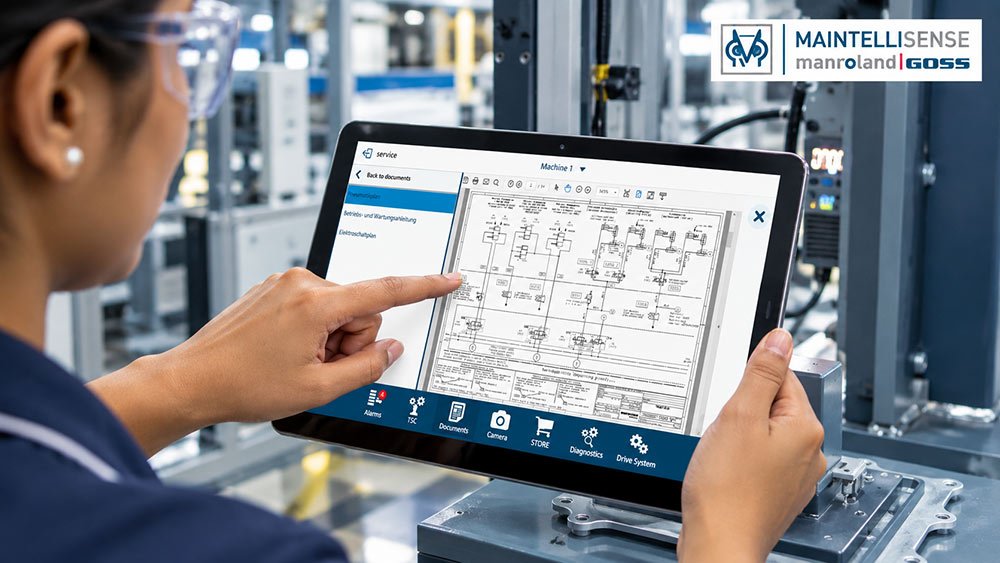
- Interval Refinement — Service records show which intervals are too long and which are too short. MAINTELLISENSE from manroland Goss supports this with fault message monitoring across presses, parameter comparison and a performance overview of each production.
A schedule that learns from its own records gets tighter each year, with fewer surprises on the production floor and fewer unplanned stops.

FAQs: Press Maintenance Schedule
How often should a printing press be serviced?
There is no single interval for every press. Frequency depends on operating intensity, number of editions, press age, equipment condition and service history. Most plants combine routine daily and weekly care with periodic specialist servicing, adjusted as condition signals show where risk is building.
Should press maintenance follow fixed intervals or equipment condition?
A press maintenance schedule should use both. Fixed intervals provide the baseline for routine maintenance, while equipment condition, production load and service history determine when inspections or servicing should move forward.
Conclusion
A press maintenance schedule is a production plan. It decides whether downtime happens on the plant’s terms or on the press’s terms.
Calendar intervals set the baseline. Condition signals, shutdown windows and service history decide when to act and where to focus.
manroland Goss India supports this with OEM-backed servicing, technical audits, spare parts for installed manroland configurations and an India-based service team backed by parent engineering.
The right schedule protects edition deadlines and keeps servicing costs planned instead of reactive.
Talk to the manroland Goss India team to review your press maintenance schedule and plan preventive servicing around production cycles to reduce unplanned downtime and protect press reliability. ENQUIRE NOW.
Our Digital Presence:
Explore manroland Goss India across web offset press solutions, certified pre-owned systems, print service support, consumables, and industry insights built for newspaper, commercial, and packaging print operations. From press installations and modernization to lifecycle support and productivity improvement, our platforms showcase how Indian print plants are adapting to changing production and capex realities.
Visit our website to explore products, services, and insights from the print industry.
Connect with us on:
Website | Products | Services | Insights
Stay updated through:
Instagram | YouTube