Walk two pressrooms running identical presses and you often find one producing clean, repeatable output while the other fights for it. Same machine, same page count, different result. The gap usually traces back to pressroom consumables — the blankets, rollers, and chemistry whose condition quietly sets how the press behaves.
manroland Goss India is the Indian subsidiary of manroland Goss Web Systems, Augsburg. Its India-based service team supports installed presses across newspaper and commercial plants, and understands consumables from inside the pressroom rather than the supply catalogue.
Consumables get bought on price and swapped out on failure. Few plants treat them as operating components that decide how reliably a press performs from one run to the next.
This blog covers how blankets, rollers, chemistry, and press-protection products work together to hold production consistent and protect press condition across the operating lifecycle.
Consumables Are Operating Components, Not Purchasing Items
Consumables belong to production, not procurement. How they are chosen and maintained shapes what the press delivers each shift.
Everyday pressroom inputs govern consistent print performance because their condition sits directly inside every run. Blankets, rollers, chemistry, and protection products decide how repeatably a press holds settings, transfers image, and produces stable output from shift to shift.

The Purchase-Price Mindset vs the Operational-Performance Mindset
Consumables sit inside daily production, not the procurement ledger. A technically capable press still delivers inconsistent output when supporting inputs deteriorate or are poorly matched to the job. Condition and suitability decide shift-to-shift reliability far more than unit price does.
Why Consumable Condition Sits Inside Press Maintenance Discipline
Consumable management is part of maintenance, not a task that runs beside it. Consistency across repeated production runs connects straight to lifecycle performance. Press capability and consumable condition cannot be treated as separate accounts, because the press only performs to the level its inputs allow.
Once consumables are read as operating components, attention moves to the parts that carry the print itself.
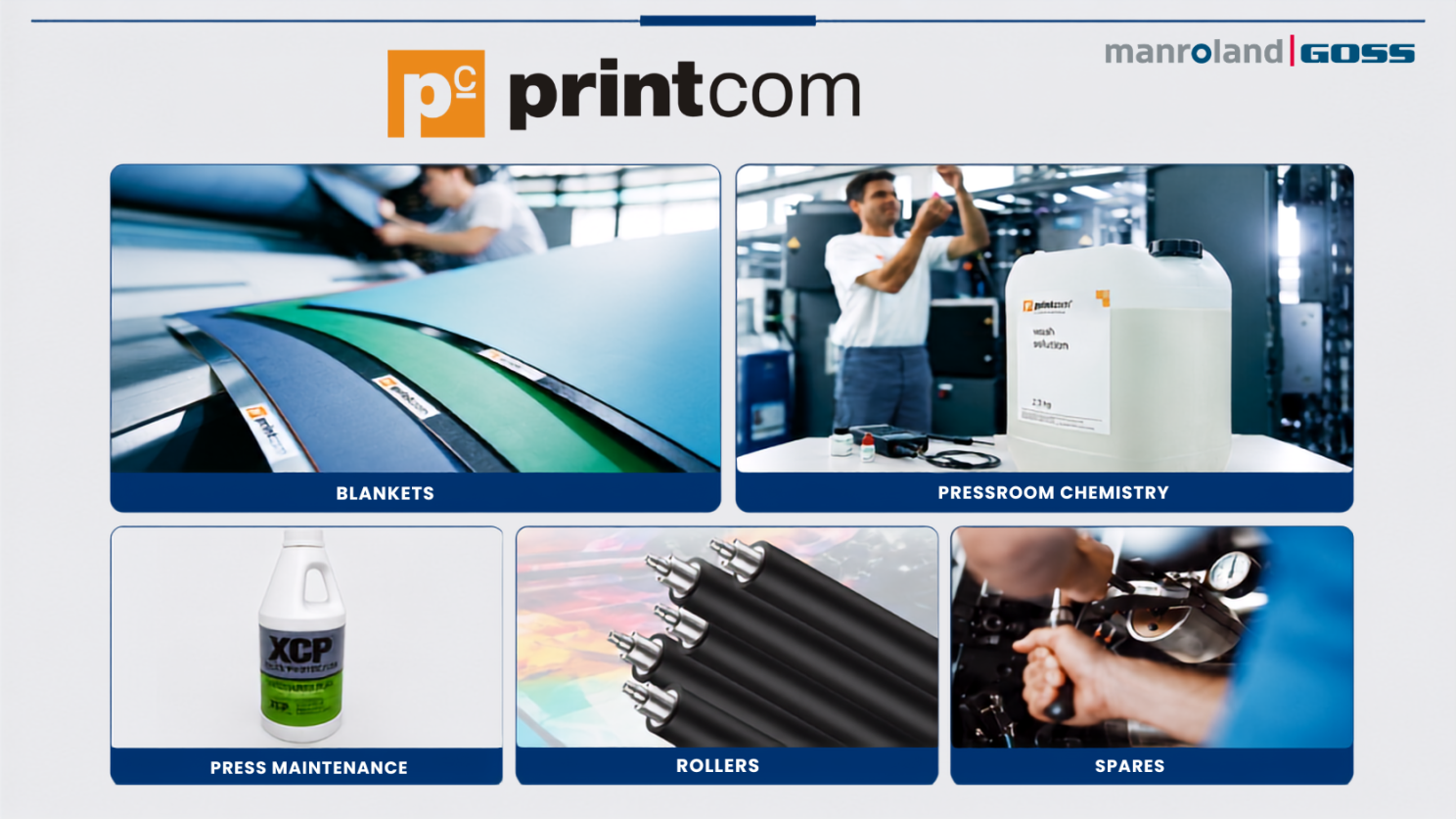
Blankets and Rollers Maintain the Mechanical Print Interface
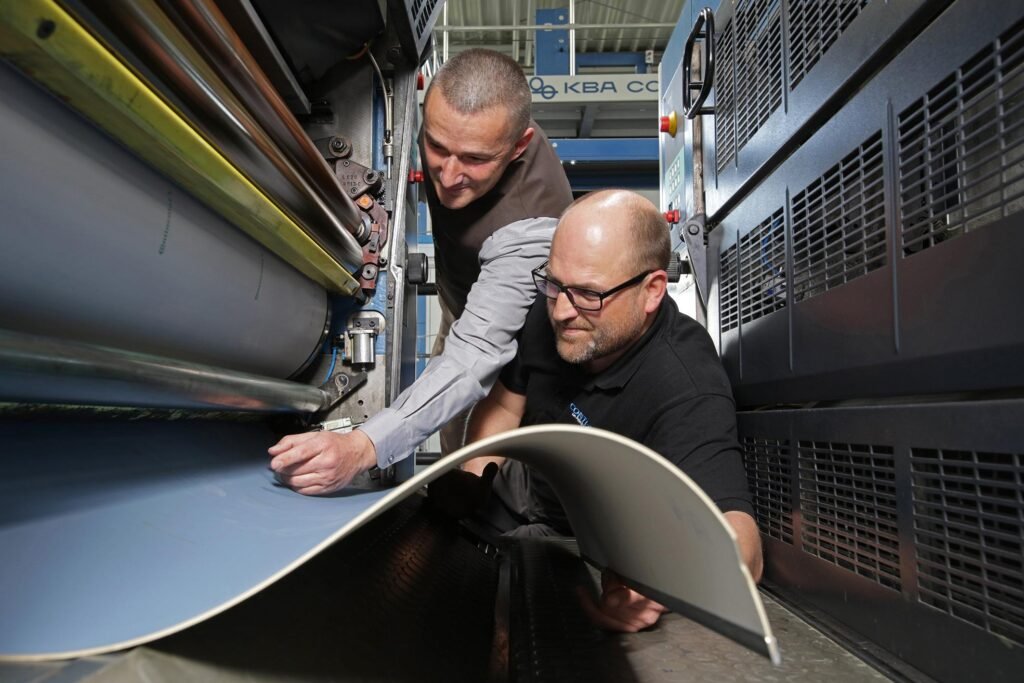
The print interface depends on components in known condition. Rollers and blankets carry the image, and their state shows up in the result.
Rollers and Controlled Ink and Dampening Delivery
- Roller condition — surface characteristics, wear, and dimensional consistency all affect how ink and dampening reach the print.
- Compensation risk — deteriorating rollers push operators to correct through press settings instead of addressing the mechanical condition underneath.
- Application range — printing press rollers cover high-speed and medium-speed web offset environments, each with its own wear profile.
- Blanket note — the blanket transfers the printed image; detailed blanket selection sits in the companion blog and stays outside this discussion.
Roller Re-rubberization as a Lifecycle Intervention
- Restoration — re-rubberization restores the functional roller surface rather than defaulting to full replacement.
- Inspection — planned inspection and re-rubberization keep roller performance usable across the operating lifecycle.
- Condition-based decision — restoration versus replacement is judged on condition and operating requirement, not on a fixed schedule.
Rollers manage the mechanical side of transfer. Chemistry manages the conditions those components operate in.
Pressroom Chemistry Supports Stable Production Conditions
Chemistry sets the operating conditions the press works within. Handled as process control, it keeps production repeatable across shifts.
Chemistry as Process Control, Not Generic Supply
Chemistry interacts with cleaning, operating condition, and repeatability across the run. Correct selection and application, consistency across shifts and operators, and compatibility with the press environment all matter. Poor chemistry discipline creates recurring production and maintenance issues that surface as symptoms elsewhere on the press.
What Happens When Chemistry Is Substituted on Price Alone?
Uncontrolled substitution on purchase price introduces variables the pressroom then has to correct. Compatibility with the press environment and operating requirements matters more than unit cost. Stable chemistry supports repeatable operation, while inconsistent chemistry moves the problem downstream into cleaning, condition, and settings, where it costs more to trace than it saved to buy.
Chemistry keeps the operating environment stable. Maintenance and protection products keep the machine itself protected.
Maintenance and Press-Protection Products Protect the Machine
Protection products guard the press between and beyond production. Applied preventively, they hold press condition instead of reacting to damage.
- Corrosion protection — Press Guard and Press Guard Plus protect cylinders, bearers, and exposed press components against corrosion.
- Lubrication and wear protection — Bearer Ring Oil handles lubrication, wear, and corrosion protection at load-bearing surfaces.
- Penetration and moisture displacement — XCP One provides penetration, lubrication, moisture displacement, and protection.
- Cleaning and degreasing — Universal Parts Cleaner supports controlled cleaning and degreasing of press components.
- Friction and corrosion barrier — Lubricate & Protect and Rust Blocker cover friction control and longer-term corrosion resistance.
- Chain protection — Chain Lubricant handles chain lubrication and wear protection. Preventive protection comes ahead of responding after corrosion or wear appears.
- System-management bridge — blankets, rollers, chemistry, cleaning, and press-protection products should be managed as one operating system. One deteriorating input can push operators to compensate through settings instead of correcting the underlying condition. Condition-based inspection should decide whether the response is cleaning, protection, restoration, re-rubberization, or replacement. Standardised consumable practices across shifts support repeatable settings, predictable production, and long-term press condition.
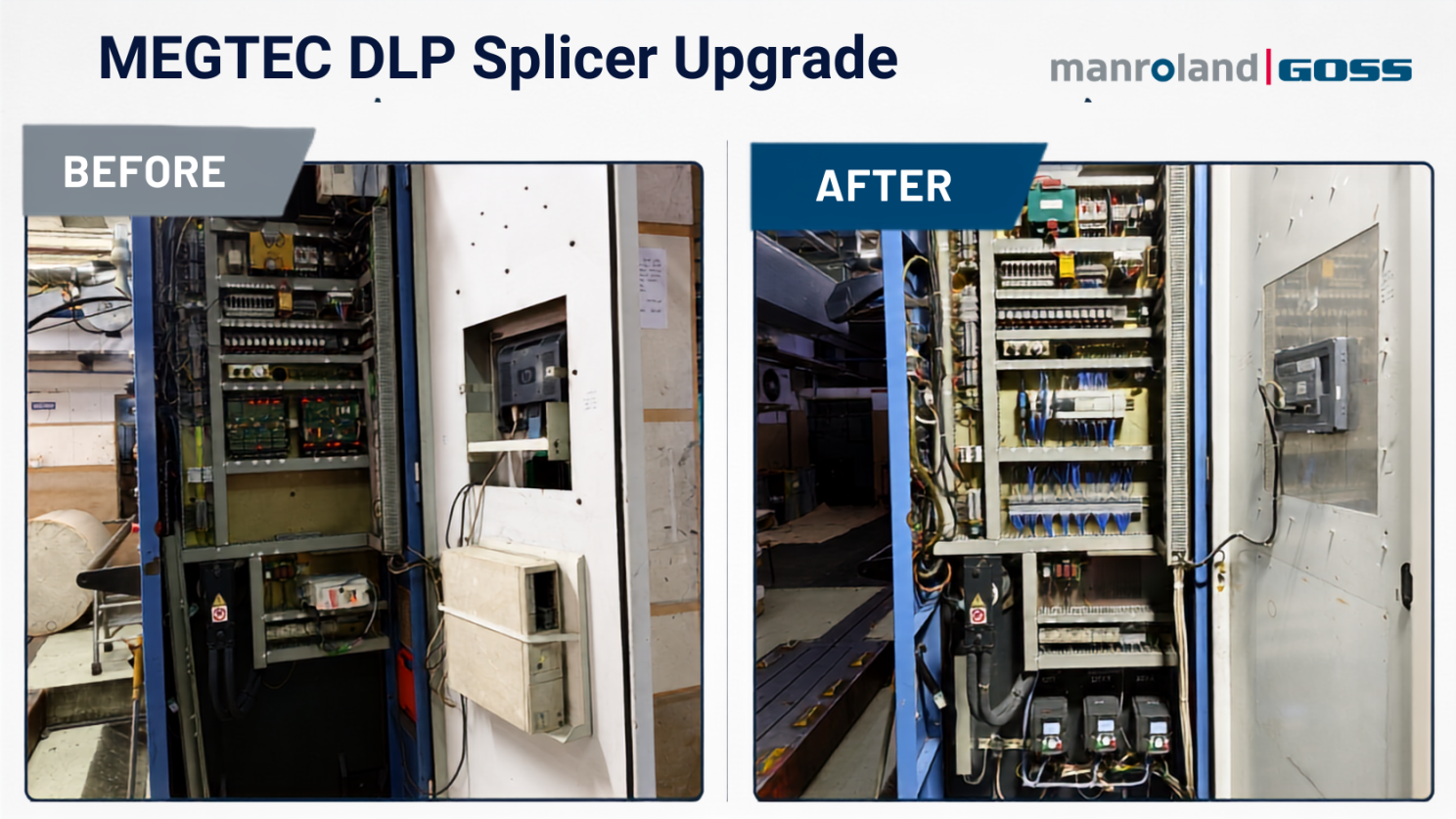
A recent manroland Goss India service project demonstrated the importance of lifecycle planning beyond routine press maintenance. A 28-year-old reel splicer remained operationally critical, while its electronic spares had become unavailable. The service team modernised its controls, electrical connections, PLC logic, drive parameters, and HMI environment instead of replacing the complete machine.
Managed together, these products protect the press. Managed as isolated purchases, they leave gaps the pressroom pays for later.
Conclusion
Consumables are not isolated supplies replaced when exhausted. Blankets, rollers, chemistry, and protection products work as one system, where one weak input makes another press setting look like the fault.
Condition-based inspection and replacement, standardised across shifts, holds production reliable. Arbitrary replacement and price-led substitution only move problems around.
Printcom sits within manroland Goss India’s wider press-service and lifecycle-support capability, covering consumable selection, roller re-rubberization, press protection, and service understanding across installed presses. Managed as a system, consumables protect repeatable output and the long-term condition of the press.
Talk to the manroland Goss India team for consumables and press-care support matched to your press and operating environment. ENQUIRE NOW.
Our Digital Presence:
Explore manroland Goss India across web offset press solutions, certified pre-owned systems, print service support, consumables, and industry insights built for newspaper, commercial, and packaging print operations. From press installations and modernization to lifecycle support and productivity improvement, our platforms showcase how Indian print plants are adapting to changing production and capex realities.
Visit our website to explore products, services, and insights from the print industry.
Connect with us on:
Website | Products | Services | Insights
Stay updated through:
Instagram | YouTube