Another repair request lands on the plant head’s desk. The press is still running, but breakdowns are getting closer and downtime is growing. When does another repair stop making sense and printing press refurbishment deserve evaluation?
Press age alone does not decide refurbishment. Neither does comparing one repair quote with one refurbishment quote. The decision should instead consider asset condition, supportability, production requirements and the value still left in the press.
manroland Goss India combines India-based press overhaul and refurbishment capability with OEM engineering support from Augsburg. Technical audits assess mechanical condition, controls, component wear and supportability. These findings show whether the existing press remains viable for renewal.
In this edition, we explore how press condition, recurring failures and supportability shape the next asset decision. We also examine when repair, upgrade, overhaul, refurbishment or replacement makes more sense.
Printing Press Refurbishment Starts With Asset Condition
Press condition decides whether refurbishment is viable. The installation year is only one input, and it can mislead a plant in either direction.
Printing press refurbishment is the renewal of worn components and aging systems across a structurally sound press. It restores dependable operation, brings performance back in line with the production requirement and extends the useful life of the existing asset.
Core Press Condition Determines Whether Refurbishment Is Viable
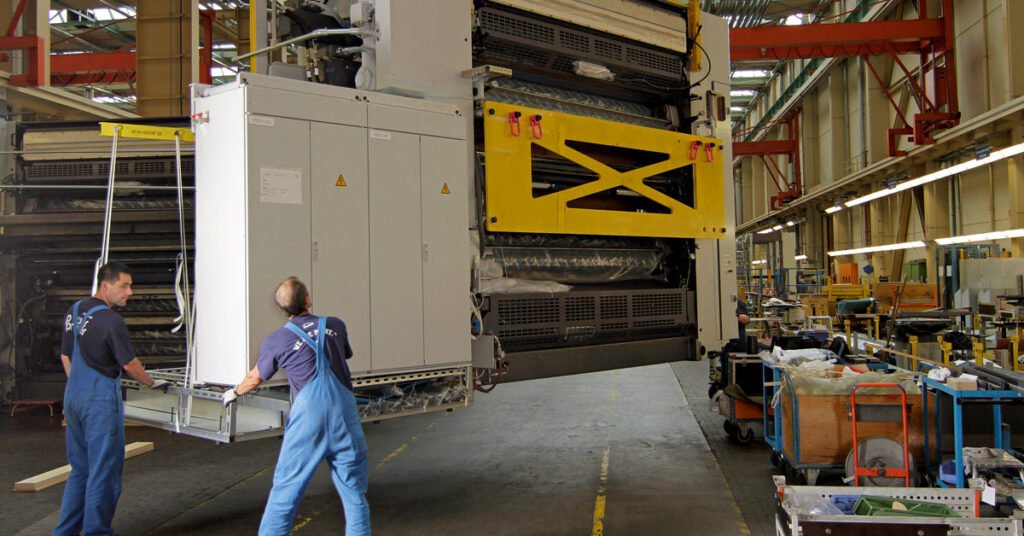
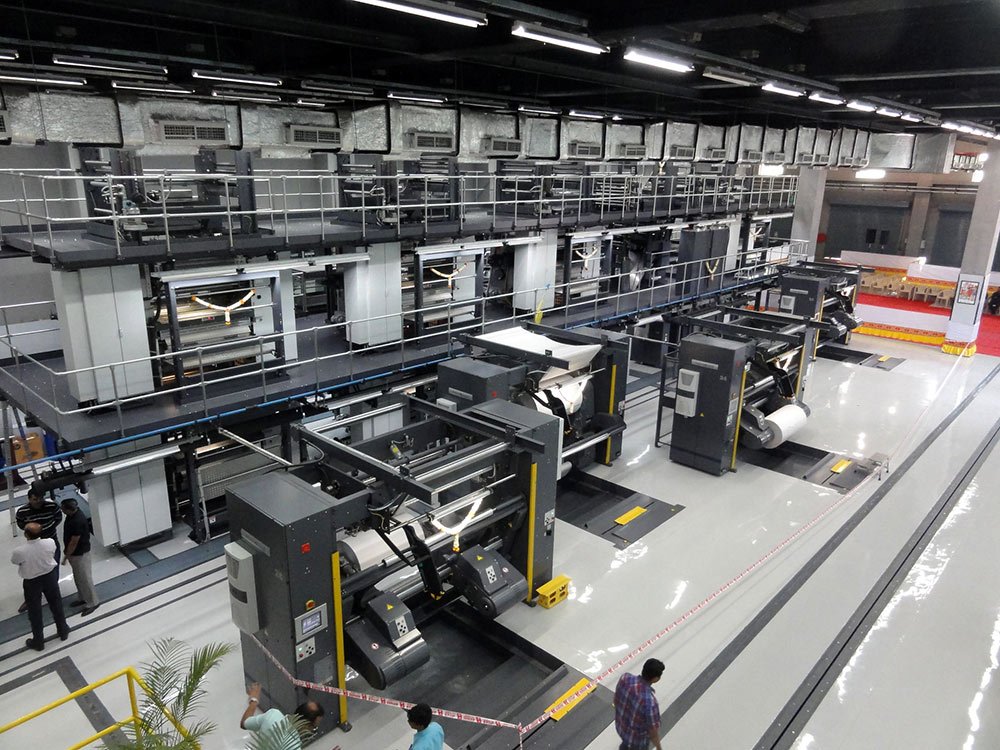
Assessment starts with the frame and core mechanics. When the base structure is sound, worn cylinders, bearings, gears and drives can be renewed with confidence. When it is not, renewal spend goes into a platform that cannot hold it.
Controls come next. Older control platforms and PLCs reach a point where spare parts and repair support end, and supportability becomes the deciding factor. Every finding in this stage feeds one question: is the underlying press platform still worth investing in?
Repair Frequency Signals the Refurbishment Window
One expensive breakdown says little on its own. A trend says a lot more. Plants should track repeat failures on the same assembly, how often engineers intervene, the direction of repair spend, the downtime those repairs cause and the knock-on effect on print schedules. When these indicators move the wrong way together, the refurbishment window is open.
Condition sets the boundary. Once the platform is confirmed as sound, the next decision is which intervention the press actually needs.
Repair, Upgrade, Overhaul or Refurbish: Choosing the Right Press Intervention
Each intervention solves a different problem. Choosing the wrong one either leaves the constraint in place or commits capital the press did not need at this stage of its life.
Matching Intervention Scope to Press Condition
The choices differ in scope, cost and shutdown time. Press condition, supportability and production requirements together determine whether repair, upgrade, overhaul, refurbishment or modernisation is the right intervention.
- Repair or Upgrade — repair addresses an isolated fault, while a press upgrade improves one system, capability or performance constraint without renewing the wider press.
- Overhaul — restores worn assemblies or systems to the required operating condition.
- Refurbishment or Modernisation — refurbishment renews multiple systems to restore dependable operation, while modernisation adds newer controls, automation or capability to a viable platform.
Modernisation Pathways for Aging Press Systems
Where the mechanics remain sound, targeted modernisation can address ageing controls, supportability gaps and performance constraints without requiring broader press renewal.
- Controls and PLC retrofits — current control platforms replace systems that no longer have spare parts or repair support.
- Reelstand, splicer and folder control upgrades — HMI, drive and control renewal extends supportability across mechanically fit equipment.
- Automation upgrades — Inline Process Control adds register, cutoff and density control to an existing press.
The right intervention removes the actual constraint. The next step is testing whether that choice holds up on cost and production continuity.
Lifecycle Cost Checks Before Printing Press Refurbishment
A refurbishment quote means little on its own. It has to be read against the condition of the press and what the plant must produce next.
The Six Checks That Decide Refurbishment Fit
Before any quote is compared, these checks belong on the evaluation sheet. Each one should be backed by plant data and service records:
- Asset condition — frame, core mechanics and the wear state of major systems, confirmed through a technical audit.
- Spare-parts availability and obsolescence — how long critical systems can realistically be supported.
- Productivity gap — the distance between current output and the production requirement, including makeready, waste and speed.
- Upgrade potential — whether targeted modernisation can close that gap.
- Lifecycle cost — total spend across the remaining useful life, with refurbishment cost as one part of it.
- Production disruption — planned shutdown time, implementation impact, continuity of print schedules during the work and the cost of lost output while the press is down.
Does Refurbishment Make More Sense Than Replacing the Press?
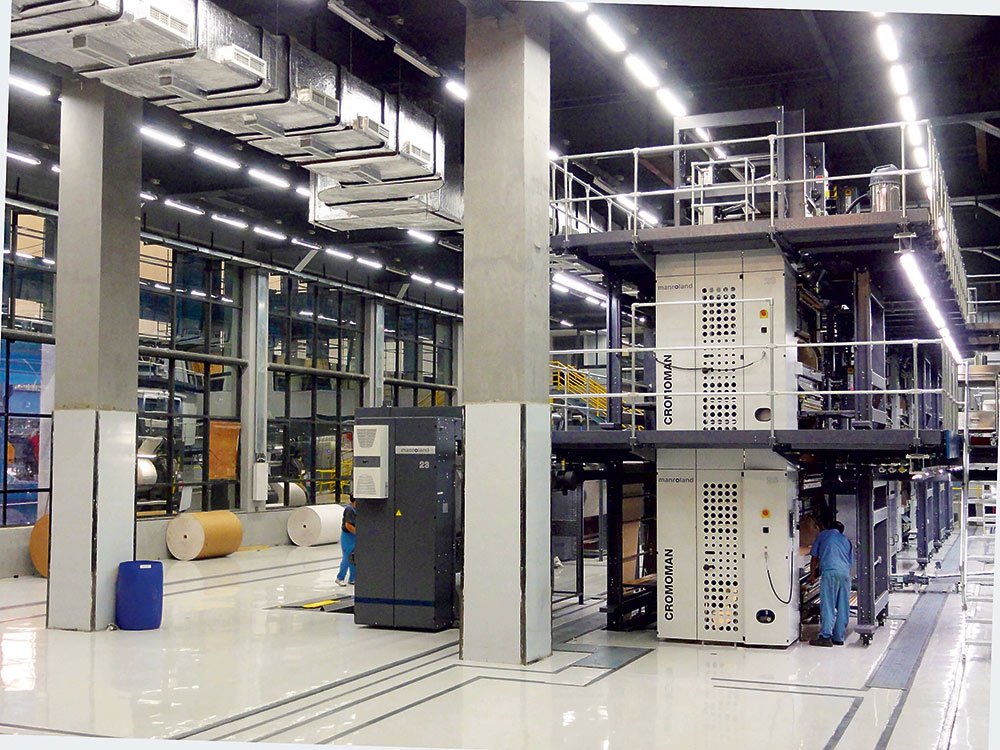
Refurbishment makes more sense when the frame and core mechanics are sound, critical systems remain supportable and the platform can meet future production requirements. When those conditions cannot be met economically, replacement deserves formal evaluation.
These checks turn a quote comparison into an asset decision. They also show when refurbishment should not go ahead at all.
Printing Press Refurbishment Limits and Replacement Triggers
Some aging presses do not justify broader renewal. Recognising those cases early protects capital and avoids reopening the same decision soon after. An honest assessment includes the outcome where the answer is replacement.
- Platform limitation — future output, format, quality or capacity requirements exceed what the existing platform can reasonably support, even after renewal of major systems.
- Supportability limitation — critical systems or components cannot be sustainably supported or modernised, which leaves the plant exposed to the next failure.
- Lifecycle limitation — the remaining useful life of the platform does not justify the scope and spend of a broader refurbishment once costs are spread across the years the press can still run.
- Economic limitation — refurbishment cost, shutdown disruption and future operating requirements together make replacement worth a formal evaluation alongside the refurbishment proposal.
Each limitation should be tested against condition data, supportability and future production requirements. Press age alone is not enough. A clear decision, whether refurbishment or replacement, protects capital and comes from the same lifecycle assessment.
FAQs: Printing Press Refurbishment
When should printing press refurbishment be considered?
Printing press refurbishment should be considered when recurring repairs, rising downtime, ageing controls, parts obsolescence or declining performance begin affecting reliability. The decision should depend on asset condition, supportability, production requirements and remaining useful life, not press age alone.
How do you decide between press overhaul, refurbishment and replacement?
A press overhaul fits when worn assemblies need restoration. Refurbishment fits when several systems require broader renewal on a viable platform. Replacement should be evaluated when structural condition, supportability, future production needs or lifecycle economics no longer justify further investment.
Conclusion
Printing press refurbishment is a condition decision first and a cost decision second. The platform either supports renewal or it does not. Cost only makes sense once that is known.
Repair, upgrade, overhaul, refurbishment and replacement are different intervention choices across an asset lifecycle. Press condition decides which one fits.
manroland Goss India brings OEM engineering from Augsburg and an India-based service team to that assessment, with overhaul and refurbishment capability across manroland and non-manroland presses.
The strongest decisions follow one path: condition, required performance, supportability, remaining useful life and lifecycle economics, then the intervention.
Talk to the manroland Goss India team for a technical assessment before your next repair, refurbishment or replacement decision. ENQUIRE NOW.
Our Digital Presence:
Explore manroland Goss India across web offset press solutions, certified pre-owned systems, print service support, consumables, and industry insights built for newspaper, commercial, and packaging print operations. From press installations and modernization to lifecycle support and productivity improvement, our platforms showcase how Indian print plants are adapting to changing production and capex realities.
Visit our website to explore products, services, and insights from the print industry.
Connect with us on:
Website | Products | Services | Insights
Stay updated through:
Instagram | YouTube